


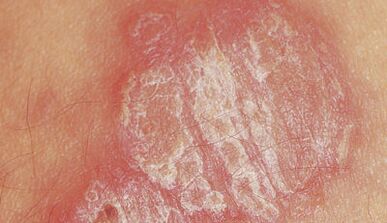
Psoriasis is a chronic dermatological disease that is currently affecting more and more people.Psoriasis is expressed by the appearance of red papules on the skin;it is popularly called "scaly lichen".The skin becomes red and itchy, accompanied by a burning sensation.Lesions range from pinprick to extensive and generalized.Lesions most often occur on the scalp, arms, shoulders, back, groin, hands, and soles.Psoriasis of the joints, bones, nails, external genitalia and internal organs can also be found, but these forms are diagnosed quite rarely.Signs of psoriasis include:
- The appearance of cracks on the skin, which cause very unpleasant pain;
- The structure of the nails is broken;
- Dry skin, which leads to the destruction and peeling of skin cells;
- The appearance of blisters on the surface of the feet and inside the hands;
- The formation of red spots that cause severe itching.Swollen formations covered with a white scaly film.
Psoriasis patients often spend more time in aggressive nervous tension, suffer from depression and lower self-esteem.
If psoriasis is not treated in time, symptoms such as fever, damage to the nail surfaces and joint fractures may occur, indicating a complication of the disease.In such a situation, qualified medical help is simply required.
Since this disease is quite popular, everyone should know the main reasons for the appearance of psoriasis.
Causes of psoriasis - main theories

In modern medicine, there is still no definitive answer to the question: "Why do psoriasis plaques appear on the skin, and where does this disease come from?"
In addition to the appearance of psoriasis plaques on the skin, other dysfunctions are also diagnosed in the body, namely the functioning of the immune, nervous and endocrine systems.
The causes and mechanisms of psoriasis have been investigated for more than a century, but science does not yet have a precise definition of the specific cause of psoriasis of the skin;There are several theories that all doctors rely on:
- Immune theory;
- Genetic theory;
- Neurogenic theory;
- Virus theory.
Each theory requires detailed consideration.
Immune theory
Many renowned scientific researchers claim that when the body's immune system is weakened, autoimmune aggression occurs, as a result of which the human immune system rejects its own skin cells, mistaking them for foreign ones.One cannot disagree with this;Undoubtedly, with a decrease in immunity, a disease such as skin psoriasis can develop, but we must not ignore many other factors that can also contribute to this.
Genetic theory
It has been proven that more than 55% of the population with this disease have blood relatives with the exact same disease.If one parent in the family suffers from psoriasis, the probability of this disease in children reaches 25%, and if both parents are sick, the probability of the disease in children increases to 70-75%.Despite such impressive data, official medicine does not consider genetic predisposition to be the main cause of psoriasis.

Neurogenic theory
The main theory that most doctors rely on is the neurogenic theory.According to this theory, psoriasis occurs with increased nervous irritability, frequent stressful situations, work and private life problems, and developed neurosis.
Neurosis leads to the fact that the blood vessels narrow and the blood flow to the skin weakens, due to which papules are formed.
It has also been established that it occurs with frequent experiences, nervous shocks, the stress of moving, stimulation, and the development of skin rashes.
Virus theory
Many doctors say that psoriasis can occur against the background of an existing viral disease or even after an illness.But they still haven't found a type of virus that causes psoriasis.There is no doubt that after suffering from a viral disease or during an illness, the immune system weakens and the likelihood of psoriasis increases.
This theory of the occurrence of skin psoriasis raises many questions and doubts in medicine, since psoriasis is not considered a disease that can spread from a sick person to a healthy person.In the entire history of medicine, doctors have not recorded a single case of psoriasis infection.
Major factors
Several factors can lead to the development of psoriasis:

- Skin injuries;
- Increased nervous irritability, frequent stress;
- Viral and infectious diseases;
- Application of antibiotics, vitamin complexes;
- Changes in climatic conditions, especially when a drier climate changes to a wetter one;
- Dermatological diseases: fungal diseases, dermatitis;
- Improper diet: a lot of sweets, fatty foods, alcoholic products;
- Changes in hormone levels, especially in women during pregnancy, menopause and breastfeeding.
Psoriasis can occur as a result of any of the above factors, so people prone to this disease should protect themselves from exposure to such factors.
The main cause of psoriasis is considered to be a complex failure of the human body, which is not caused by the simultaneous effect of one but several factors.
It is a very important fact that psoriasis is non-contagious, which means that it is not spread in any way.Because there are so many different causes of psoriasis, anyone can be at risk.
It can occur in adults and children, even in infants.The earlier psoriasis appears, the more severe it can become during life.Therefore, it is very important to take care of your health, eat right, do not abuse alcohol, protect yourself from skin injuries and periodically strengthen your immune system.